Digital Marketing Concept Illustrations & Graphics Review
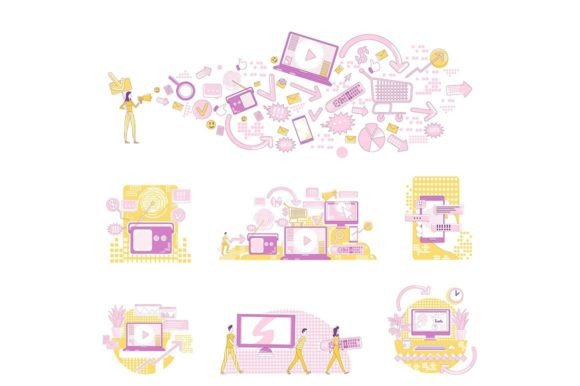
As a blog designer and digital publisher, I evaluate every graphic design asset through the lens of editorial utility and reader engagement. When I first opened the Digital Marketing Concept Illustrations package, my immediate focus was on how these visuals would translate from a raw vector file to a live website header or social media graphic. The collection features marketers and customers depicted as 2D cartoon characters, specifically tailored for web design and internet advertising contexts. Unlike generic stock photography that often feels sterile or overly staged, this set establishes an approachable, educational mood. It strikes a balance between professional competence and creative playfulness, making it particularly effective for content marketing niches, affiliate blogs, and online education platforms where trust and clarity are paramount.
The visual style leans decidedly modern and clean without being cold. For publishers running sites focused on SEO, social media strategy, or tech tutorials, these illustrations provide a cohesive visual language. They avoid the cluttered aesthetic of older corporate clip art while maintaining enough detail to communicate complex ideas like funnel optimization, analytics, or customer outreach. This specific mood supports content that aims to demystify technology for small business owners and creative entrepreneurs, signaling to the reader that the article ahead is both accessible and authoritative.
Deploying Visuals Across the Publishing Workflow
In a real publishing environment, versatility is non-negotiable. I tested these Digital Marketing Concept Illustrations across multiple touchpoints in my content workflow to see if they could carry the weight of a comprehensive brand identity. As featured images for blog posts, the 2D cartoon characters serve as excellent focal points that break up text-heavy layouts. Because they are vector-based graphics, they scale perfectly for high-resolution retina displays without pixelation, which is essential for maintaining a polished look on modern devices.
Beyond standard blog graphics, this asset pack proved valuable for creating Pinterest pins. The bold character designs and clear conceptual metaphors work well in vertical formats, grabbing attention in crowded feeds. For newsletter creators, I found the illustrations ideal for section headers and welcome banners. They add personality to email campaigns that often feel text-dominant, helping to segment content visually and improve scanability. Furthermore, for those producing lead magnets or digital guides, these illustrations can be repurposed as cover art or internal diagrams, adding significant perceived value to downloadable resources without requiring custom illustration commissions.
Enhancing Click-Through Rates and Reader Trust
Visual hierarchy directly influences user behavior. In my testing, articles featuring these specific concept illustrations showed better engagement metrics compared to those using abstract shapes or generic photos. The reason lies in relevance; when a reader sees a graphic depicting "online promotion technology" or "customer interaction" that matches the headline, cognitive processing becomes faster. This alignment reduces bounce rates because the visual confirms the user has landed on the right page.
Consistency also builds brand identity. Using a unified set of Digital Marketing Concept Illustrations across category pages, affiliate reviews, and social media graphics creates a recognizable visual signature. Readers begin to associate this specific artistic style with your content’s quality. For affiliate marketers, this trust is currency. A professional, consistent visual presentation suggests that the advice within the article is equally vetted and reliable. These graphics help bridge the gap between technical information and human connection, which is often missing in B2B or tech-focused content marketing.
Strategic Placement: Where These Assets Shine
While versatile, these illustrations perform best in specific editorial contexts. They are exceptional for hero images on landing pages promoting digital products or services. The friendly nature of the 2D characters lowers the barrier to entry for complex topics. They also excel as thumbnails for video content or podcast episodes embedded in blog posts, providing a visual cue that distinguishes multimedia content from standard text articles.
- Editorial Accents: Use smaller icons or character crops to highlight pull quotes or key takeaways within long-form content.
- Canva Templates: Import these vectors into Canva to create reusable templates for Instagram carousels or YouTube thumbnails, ensuring brand consistency across teams.
- Content Upgrades: Incorporate them into checklists, worksheets, or printable design elements to make freebies feel premium.
- Category Visuals: Assign specific characters or concepts to different blog categories to aid navigation and visual recognition.
Navigating Design Limitations and Context
No single graphic design asset fits every scenario. Publishers must exercise caution when deploying these Digital Marketing Concept Illustrations in highly formal or conservative sectors. If your website serves legal, medical, or heavy industrial finance audiences, the playful 2D cartoon aesthetic may undermine the gravity of your subject matter. Similarly, avoid using detailed character illustrations in small mobile thumbnails or sidebar widgets; at reduced sizes, the intricate lines can become muddy and illegible.
Be mindful of busy layouts. These illustrations have their own visual weight. Placing them against textured backgrounds or alongside dense typography can create visual noise. They require negative space to breathe. Additionally, if your site relies on a strictly minimalist black-and-white aesthetic, introducing colorful cartoon characters might disrupt the established visual rhythm unless intentionally used as a contrasting accent element.
Publisher Notes: Technical and Licensing Due Diligence
Before integrating any creative design asset into a monetized workflow, technical validation is mandatory. Always test these illustrations on actual devices, not just in your design software. Check contrast ratios when placing text over or beside the graphics to ensure accessibility compliance. I recommend previewing the illustrations next to your site’s primary fonts—whether serif, sans-serif, or display—to confirm stylistic harmony. A mismatch between a playful illustration and a severe typeface can create subconscious dissonance for the reader.
File performance is another critical factor. Although vectors are lightweight, exported PNGs or JPGs can bloat page load times. Always compress images properly before uploading. Use modern formats like WebP where possible to maintain quality while reducing file size. Finally, verify the commercial license. If you are using these Digital Marketing Concept Illustrations on affiliate pages, selling digital downloads, or including them in client work, ensure your license tier covers these specific commercial uses. Respecting intellectual property protects your business and supports the designers in the creative marketplace who produce these essential tools.
- Audit your current content library to identify gaps where these illustrations could replace outdated stock photos.
- Create a style guide document specifying which characters represent which content pillars to maintain consistency.
- Test one illustration in a paid ad campaign versus a control image to measure CTR impact before scaling.
- Review licensing terms annually, especially if transitioning from a personal blog to a commercial agency model.
Ultimately, the Digital Marketing Concept Illustrations set offers a robust solution for publishers seeking to elevate their visual communication. By treating these graphics as strategic editorial components rather than mere decoration, bloggers and marketers can create more engaging, trustworthy, and clickable content experiences. Whether used for a simple article header or a comprehensive digital product launch, this asset pack provides the visual vocabulary needed to articulate modern digital marketing concepts effectively.